Italiano:
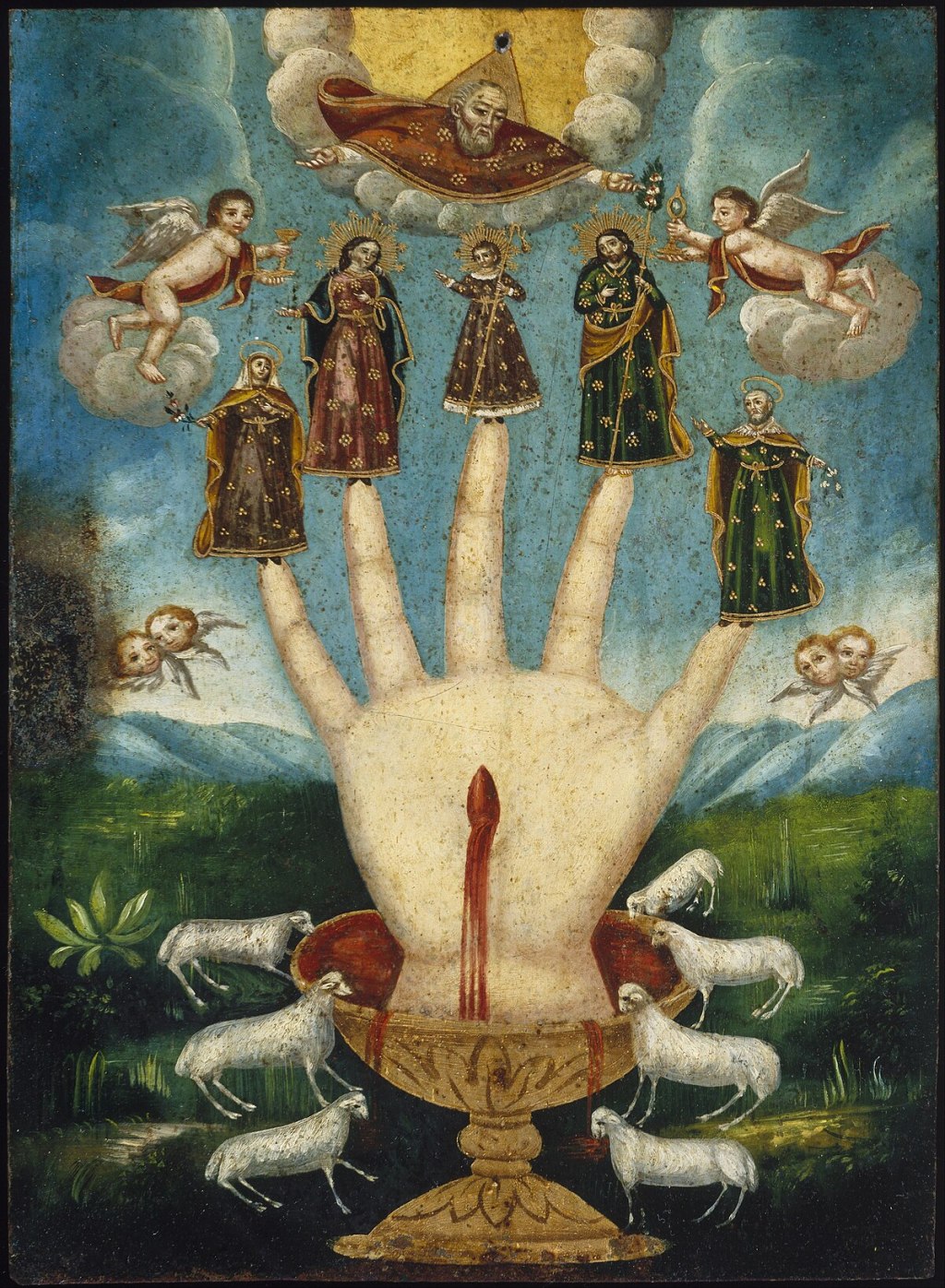
La Mano Poderosa (La Mano Tutta-Potente) è un’opera che fonde la spiritualità religiosa con la tradizione popolare messicana, unendo simboli sacri e familiari per evocare la protezione divina. La rappresentazione iconografica della Mano Poderosa, pur avendo radici europee (in particolare nel culto di Santa Anna), è stata reinterpretata e adattata nel contesto della devozione messicana, dove assume un significato profondo legato alla protezione e benedizione della famiglia.
Il concetto della “Mano Poderosa” rappresenta il potere divino che protegge la famiglia e la comunità, riflettendo l’importanza di queste figure nella fede popolare messicana. Cristo, sorretto da questa mano, è circondato dai suoi genitori, Maria e Giuseppe, e dai suoi nonni, Anna e Gioacchino. La mano, che porta anche la ferita delle stimmate, rimanda sia alla Crocifissione che alla vita di San Francesco d’Assisi, enfatizzando i temi del sacrificio e della redenzione. I sette agnelli, che bevono dal calice del sangue di Cristo, sono un riferimento al Libro delle Rivelazioni, evocando il sacrificio universale di Cristo per l’umanità.
Oggi conservata presso il Brooklyn Museum, l’opera rappresenta un esempio significativo della tradizione religiosa popolare messicana.
Fonte: https://www.brooklynmuseum.org/it-IT/objects/766
English:
The Mano Poderosa (The All-Powerful Hand) is a work that blends religious spirituality with Mexican folk tradition, combining sacred and familial symbols to evoke divine protection. The iconographic representation of the All-Powerful Hand, while having European roots (particularly in the cult of Saint Anne), has been reinterpreted and adapted in the context of Mexican devotion, where it assumes a profound meaning tied to the protection and blessing of the family.
The concept of the “All-Powerful Hand” represents divine power that protects family and community, reflecting the importance of these figures in Mexican folk faith. Christ, supported by this hand, is surrounded by his parents, Mary and Joseph, and his grandparents, Anne and Joachim. The hand, also bearing the stigmata, refers both to the Crucifixion and the life of Saint Francis of Assisi, emphasizing themes of sacrifice and redemption. The seven lambs, drinking from Christ’s blood chalice, are a reference to the Book of Revelations, evoking Christ’s universal sacrifice for humanity.
Today, housed at the Brooklyn Museum, the artwork represents a significant example of Mexican folk religious tradition.
Source: https://www.brooklynmuseum.org/it-IT/objects/766
 marginalia