Italiano:
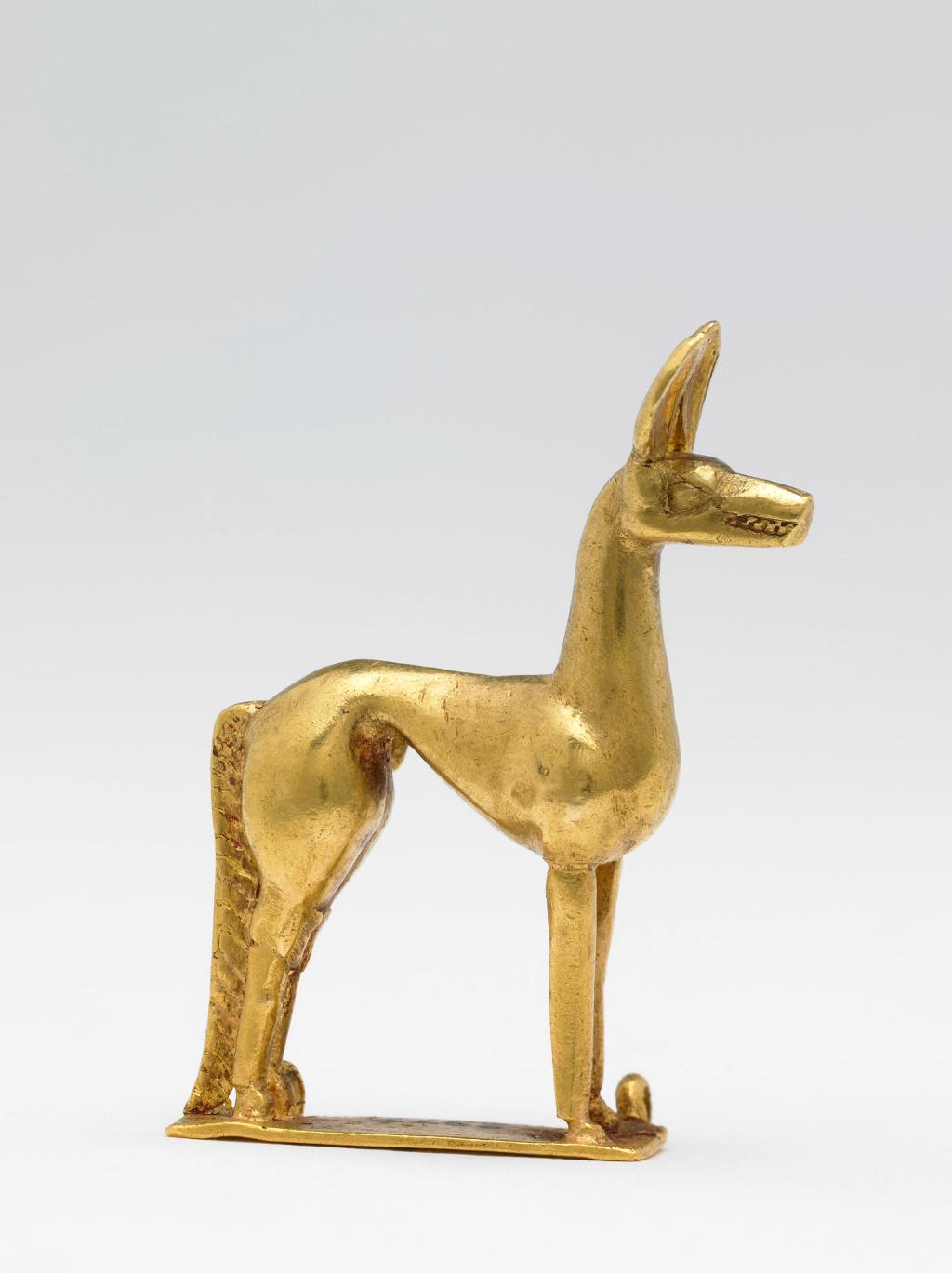
Questo amuleto d’oro raffigurante un animale (probabilmente un cane o uno sciacallo, ma l’attribuzione rimane incerta perché sembra avere degli zoccoli e in tal caso potrebbe essere un asino) fa parte della collezione di gioielli rinvenuta nella piramide della regina di Kush Amanishaketo. La piramide fu scoperta e saccheggiata nel 1834 dall’ex soldato italiano Giuseppe Ferlini, che depredò diverse piramidi nell’area di Meroe per venderne i tesori.
L’amuleto, risalente alla fine del primo secolo Avanti Cristo (Amanishaketo fu regina approssimativamente tra il 10 e l’1 ac) è oggi conservato nella sezione dedicata a Egitto e Sudan del British Museum.
Fonte: https://www.britishmuseum.org/collection/object/Y_EA68502?selectedImageId=273462001
English:
This gold amulet depicting an animal (probably a dog or a jackal, but the attribution remains uncertain because it appears to have hooves: in that case it could also be a donkey) is part of the collection of jewels found in the pyramid of the queen of Kush Amanishaketo. The pyramid was discovered and looted in 1834 by the former Italian soldier Giuseppe Ferlini, who plundered several pyramids in the Meroe area to sell their treasures.
The amulet, dating to the end of the first century BC (Amanishaketo was queen approximately between 10 and 1 BC), is now preserved in the Egypt and Sudan section of the British Museum.
Source: https://www.britishmuseum.org/collection/object/Y_EA68502?selectedImageId=273462001
 marginalia