Italiano:
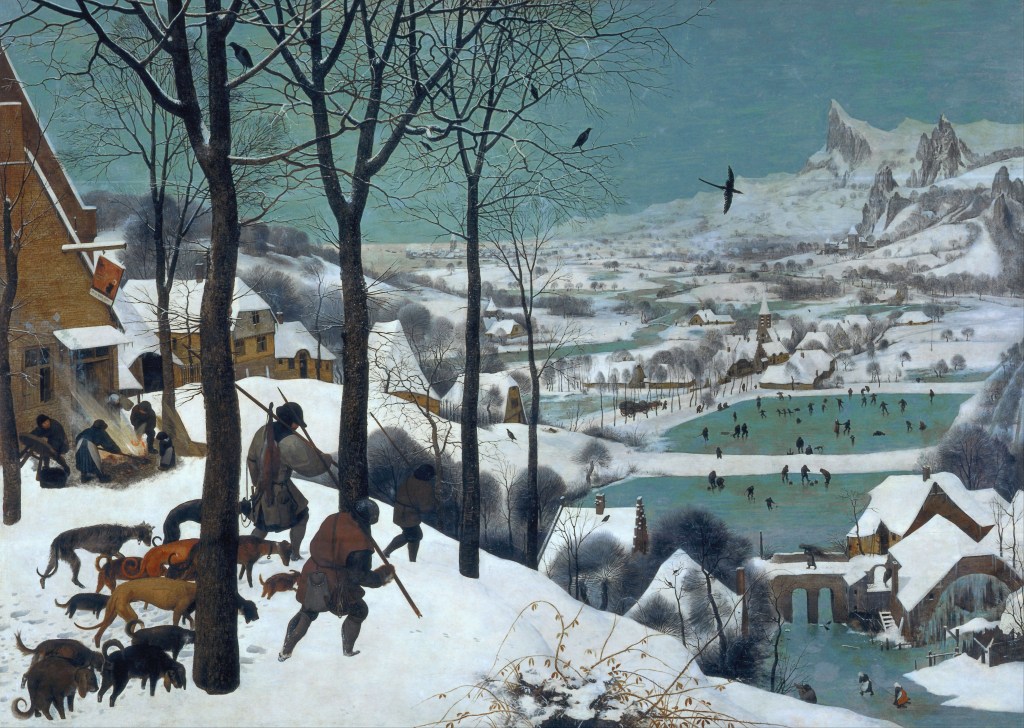
La Piccola Era Glaciale fu un periodo di raffreddamento climatico che colpì l’Europa tra il XIV e il XVIII secolo e che ne influenzò in maniera sostanziale non solo il paesaggio, ma anche le abitudini e i contesti culturali. I fiumi ghiacciati in inverno divennero un fenomeno frequente: il Tamigi si trasformava in un mercato all’aperto durante le frost fairs, mentre i canali delle Fiandre si riempivano di pattinatori, immortalati nei dipinti di Hendrick Avercamp. Le estati brevi e piovose si tradussero in carestie e crisi economiche, favorendo rivolte e instabilità politica, mentre gli inverni rigidi agevolarono la diffusione di malattie su una popolazione resa già cagionevole dalla malnutrizione. Alcuni studiosi ipotizzano che il cambiamento climatico abbia contribuito all’espansione di fenomeni come la caccia alle streghe, considerate le artefici delle carestie e dei disastri ambientali connessi al freddo, e la depressione: risale proprio al Seicento – momento di picco della Piccola Era Glaciale – il celebre Anatomy of Melancholy di Robert Burton, che attribuiva la malinconia diffusa anche al clima gelido e buio. Il Seicento fu anche il secolo che vide più monarchi europei avvicinarsi all’alchimia, all’astrologia e alla magia, quando non a dedicarvisi direttamente (come fece l’imperatore Rodolfo II d’Asburgo).
Fonte: Wolfgang Behringer, Storia culturale del clima
English:
The Little Ice Age was a period of climatic cooling that affected Europe between the 14th and 18th century and substantially influenced not only the landscape, but also the habits and cultural contexts. Frozen rivers in winter became a frequent phenomenon: the Thames was transformed into an open-air market during the frost fairs, while the canals of Flanders filled with skaters, as in the paintings of Hendrick Avercamp. The short and rainy summers resulted in famine and economic crisis, favoring revolts and political instability, while the harsh winters encouraged the spread of diseases in a population already made sickly by malnutrition. Some scholars suggest that climate change has contributed to the expansion of phenomena such as witch hunts, considered the architects of famine and environmental disasters linked to the cold, and depression: the famous Anatomy of Melancholy by Robert Burton – which dates back to the 17th century, the peak of the Little Ice Age – attributed the widespread melancholy also to the cold and dark climate. The 17th was also the century that saw more European monarchs approach alchemy, astrology and magic, when they did not dedicate themselves to them directly (as did the emperor Rudolf II of Habsburg).
Source: Wolfgang Behringer, A cultural history of climate
 marginalia