Italiano:
Gli ushabti, che in egizio significava letteralmente “coloro che rispondono”, sono statuette funerarie che avevano lo scopo di sostituire il defunto nel caso fosse chiamato a svolgere lavori gravosi nell’aldilà. Erano in numero variabile, da poche unità a centinaia, e venivano conservati in una cassetta apposita. Spesso vi si trova incisa o dipinta questa formula: “O questo ushabti, se sarà chiamato [il tal dei tali] per coltivare i campi, irrigare le rive, portare la sabbia da Oriente a Occidente, dirai: lo faccio io, eccomi!”.
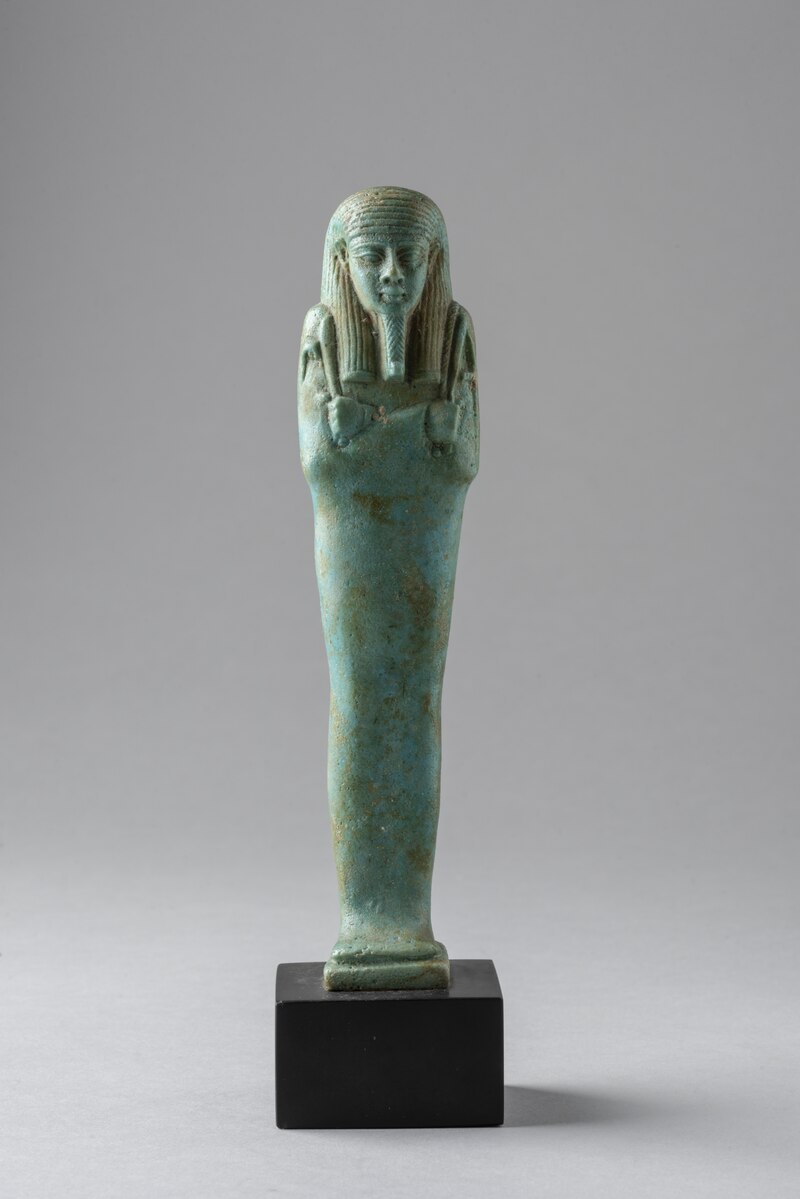
Dato che uno dei cardini dell’organizzazione egiziana del lavoro era il reclutamento della popolazione per varie attività, gli ushabti servivano a sollevare il defunto dall’obbligo di lavorare anche dopo la morte. L’ushabti in foto, conservato al Museo Egizio di Torino, apparteneva all’ammiraglio Hekaemsaf.
Fonte: Museo Egizio di Torino, CC0, https://commons.wikimedia.org/w/index.php?curid=130844094
English:
Shabtis, which in Egyptian literally meant “those who answer”, are funerary statuettes that were intended to replace the deceased in the event that he was called to carry out arduous work in the afterlife. They varied in number, from a few units to hundreds, and were kept in a special box. This formula is often engraved or painted on them: “O this shabti, if he [so and so] is called to cultivate the fields, irrigate the banks, carry sand from the East to the West, you will say: I will do it, here I am!”.
Since one of the cornerstones of the Egyptian organization of work was the recruitment of the population for various activities, the shabtis served to relieve the deceased from the obligation to work even after death. The shabti in the photo, preserved at the Egyptian Museum in Turin, belonged to Admiral Hekaemsaf.
Source: Museo Egizio di Torino, https://commons.wikimedia.org/w/index.php?curid=130844094
 marginalia