Italiano:
Il burraco, uno dei giochi di carte più noti e amati in Italia, deve in realtà le sue origini all’Uruguay, dove si sviluppò negli anni ’40 del Novecento come variante della Canasta. Alla base del nome sembrerebbe esserci la parola portoghese buraco, cioè “setaccio”, forse in riferimento all’atto di “setacciare” le carte scartandole a turno che il gioco richiede.
Il burraco arrivò in Italia intorno agli anni ’80 e divenne immediatamente molto popolare: personaggi celebri come Luciano Pavarotti e Carlo Azeglio Ciampi parteciparono a tornei di burraco, ampliando ulteriormente la notorietà del gioco e dando il via a un’operazione di codifica delle regole ad opera della FIBUR, la Federazione Italiana Burraco. L’Italia è, ad oggi, l’unico paese al mondo in cui il burraco è regolamentato in maniera precisa.
Il burraco prevede due mazzi da 54 carte francesi, inclusi i jolly, e si può giocare in due o a coppie. All’inizio ogni giocatore riceve 11 carte, mentre altri due mazzetti da 11 – detti “pozzetti” – vengono messi da parte per la seconda fase del gioco. L’obiettivo è calare combinazioni di scale o tris cercando di formare almeno un burraco, cioè una combinazione di sette o più carte. I jolly e i due, detti anche “pinelle”, possono avere qualsiasi valore; tuttavia, un burraco senza pinelle (“burraco pulito”) vale molti più punti. La mano finisce quando uno dei due giocatori riesce a chiudere, cioè a calare tutte le carte che aveva in mano incluse quelle del pozzetto, ma non è detto che chi chiude per primo abbia vinto: i punti vengono calcolati tenendo conto non solo dei burrachi e della chiusura, ma anche del tipo di carte calate nel corso della partita. Carte come l’asso e le figure, ad esempio, hanno valori più alti delle altre, così come le pinelle. Vince chi raggiunge per primo la soglia di punteggio prestabilita (che può essere 500, 1005, 2005 o anche 3000 punti).
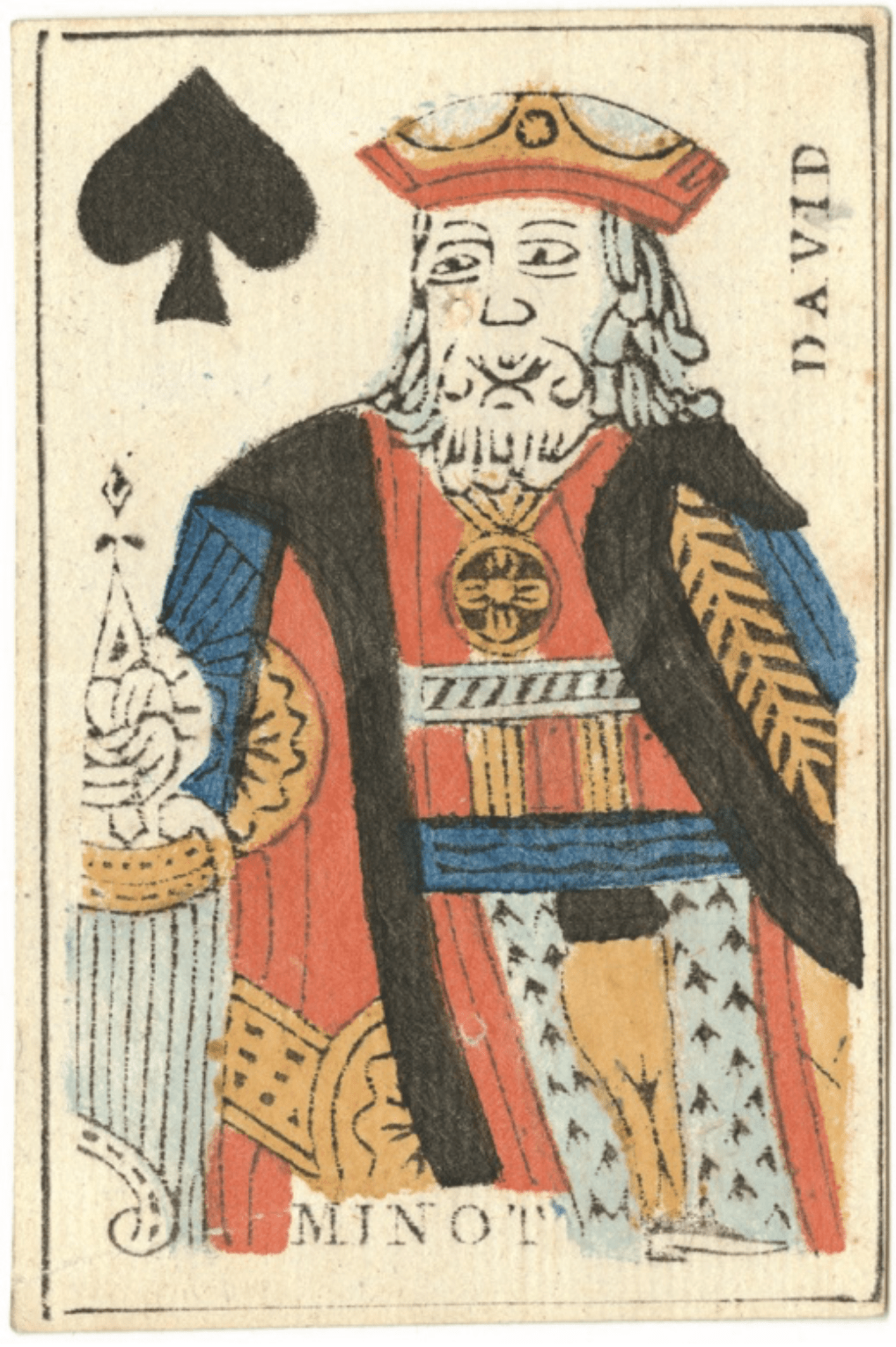
Crediti immagine: Carta da gioco, XIX secolo, via Wikimedia Commons
English:
Burraco, one of the most famous and beloved card games in Italy, actually owes its origins to Uruguay, where it was born in the 1940s as a variant of Canasta. The name seems to be based on the Portuguese word buraco, meaning “sieve”, perhaps in reference to the act of “sieving” the cards by discarding them that the game requires. Burraco arrived in Italy around the 1980s and immediately became very popular: famous people such as Luciano Pavarotti and Carlo Azeglio Ciampi participated in burraco tournaments, further increasing the notoriety of the game, and at the same time a process of codifying the rules was started by FIBUR, the Italian Burraco Federation. Italy is, to date, the only country in the world where burraco is regulated in a precise manner.
Burraco has two decks of 54 French cards, including jokers, and can be played by two people or in pairs. At the beginning each player receives 11 cards, while two other decks of 11 – called “pozzetti” – are set aside for the second phase of the game. The aim is to lay down combinations of straights or threes trying to form at least one burraco, which is a combination of seven or more cards. The jokers and the twos, also called “pinelle”, can have any value; however, a burraco without pinelle (“clean burraco”) is worth many more points. The hand ends when one of the two players manages to close, that is, to lay down all the cards he had in his hand including those in the pozzetto, but it is not a given that the first player to close has won: the points are calculated taking into account not only the burracos and the closure, but also the type of cards laid during the game. Cards such as the ace and the face cards, for example, have higher values than the others, as do the pinelle. The first player to reach the pre-established score threshold (which can be 500, 1005, 2005 or even 3000 points) wins.
Image credits: Playing card, XIX century, via Wikimedia Commons
 marginalia
