Italiano:
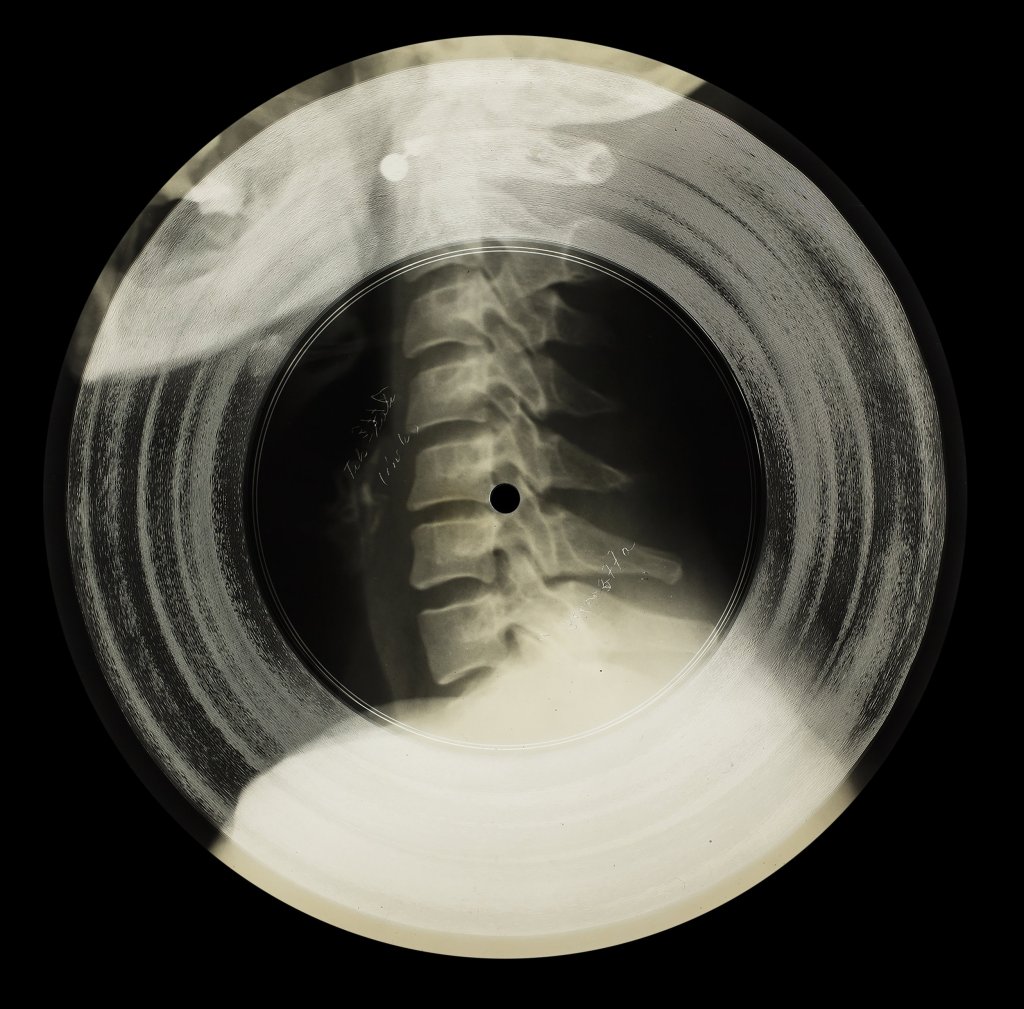
I rëbra, noti anche come “musica sulle ossa” o roentgenizdat, erano dischi clandestini realizzati in Unione Sovietica tra gli anni ’40 e ’60 utilizzando lastre radiografiche scartate. Il nome “rëbra”, che in russo significa “costole”, deriva dalle immagini ossee visibili sulle radiografie. Questi supporti improvvisati venivano incisi con musica proibita dal regime, come jazz, rock and roll e canzoni di artisti occidentali o emigrati, tra cui Elvis Presley, i Beatles e Pëtr Leščenko. Le lastre, spesso recuperate dai rifiuti ospedalieri, venivano tagliate in forma circolare e forate al centro con una sigaretta accesa per creare il foro del perno. La qualità audio era scarsa e la durata limitata a poche riproduzioni, ma rappresentavano un mezzo fondamentale per diffondere musica censurata. Alcuni rëbra si possono oggi ascoltare online in questo archivio.
Crediti immagine: https://www.x-rayaudio.com/
English:
Rëbra, also known as “bone music” or roentgenizdat, were underground records produced in the Soviet Union between the 1940s and 1960s using discarded X-ray films. The term “rëbra,” meaning “ribs” in Russian, refers to the bone images visible on the X-rays. These makeshift discs were etched with music banned by the regime, such as jazz, rock and roll, and songs by Western or émigré artists, including Elvis Presley, The Beatles, and Pyotr Leshchenko. The X-rays, often salvaged from hospital waste, were cut into circular shapes and had a central hole burned with a cigarette to fit onto a turntable. Audio quality was poor, and the discs could only be played a few times, but they served as a crucial means of disseminating censored music. Some of them can be listened to online visiting this archive.
Image credits: https://www.x-rayaudio.com/
 marginalia