*Un contributo di / a contribution by: Nicola Tedesco
Italiano:
Nel corso dei secoli le lingue discendenti dal latino hanno superato i confini italici e poi europei in cui si sono originate, raggiungendo continenti lontani e crescendo nel numero di parlanti. Ma non è questa la fortuna delle lingue neolatine di cui si parla qui: si parla della fortūna con la u lunga, quella che sfogliando sui dizionari di latino al liceo mostrava una cascata di significati a seconda di come, dove e da chi veniva scritta.
In latino infatti fortuna indicava la sorte, il fato, il caso: nè buona, nè cattiva, neutra e bendata. Col passare del tempo, però, il latino si è sciolto in decine di lingue e ognuna ha declinato il termine e il suo significato in maniera diversa.
L’italiano mantiene la parola praticamente invariata, ma solo nella forma: la fortuna è positiva e contrapposta alla sfortuna. Usiamo invece la parola sorte (lat. sors, sortis) per indicare la casualità del destino. Ma da questa stessa radice latina abbiamo lo spagnolo suerte e il portoghese sorte che hanno invece accezione positiva, esattamente come il passaggio dal latino all’italiano di fortuna. Come si esprime quindi nella penisola iberica il concetto di caso o destino? Be’, gli spagnoli prendono in prestito l’araboaz-zahr (“il dado”) per la parola azar (basti pensare al gioco d’azzardo che condivide la stessa etimologia). I portoghesi non si lasciano scappare l’occasione di distinguersi dagli ingombranti vicini di casa e usano la stessa parola ma per indicare la sfortuna, la sfiga, la iella, insomma quando le cose continuano ad andarci male e chiediamo alla nonna della nostra amica di controllare se abbiamo il malocchio. I francesi invece riprendono l’idea del dado per indicare il fato con “chance”, derivato dal latino cadentia che indicava proprio la caduta dei dadi. Ultimo, ma non per importanza, è il rumeno: lingua romanza esiliata tra le popolazioni slave che per forza di cose ne ha subito l’influenza linguistica. Nonostante esista la parola soarta (di chiara origine latina sors, sortis), più comune nell’uso è il termine noroc. Da una lingua che ha preso in prestito dagli slavi “da” per dire “sì”, non c’è da sorprendersi se ha deciso di affidare la propria sorte proprio a loro: noroc deriva dallo slavo ecclesiastico naroku (letteralmente “sul tempo”), un verdetto o giudizio di origine divina. Insomma mentre gli italiani si affidano alla dea bendata, spagnoli, portoghesi e francesi si dedicano al gioco dei dadi e infine i rumeni sperano in un segnale dall’uomo in cielo con la barba.
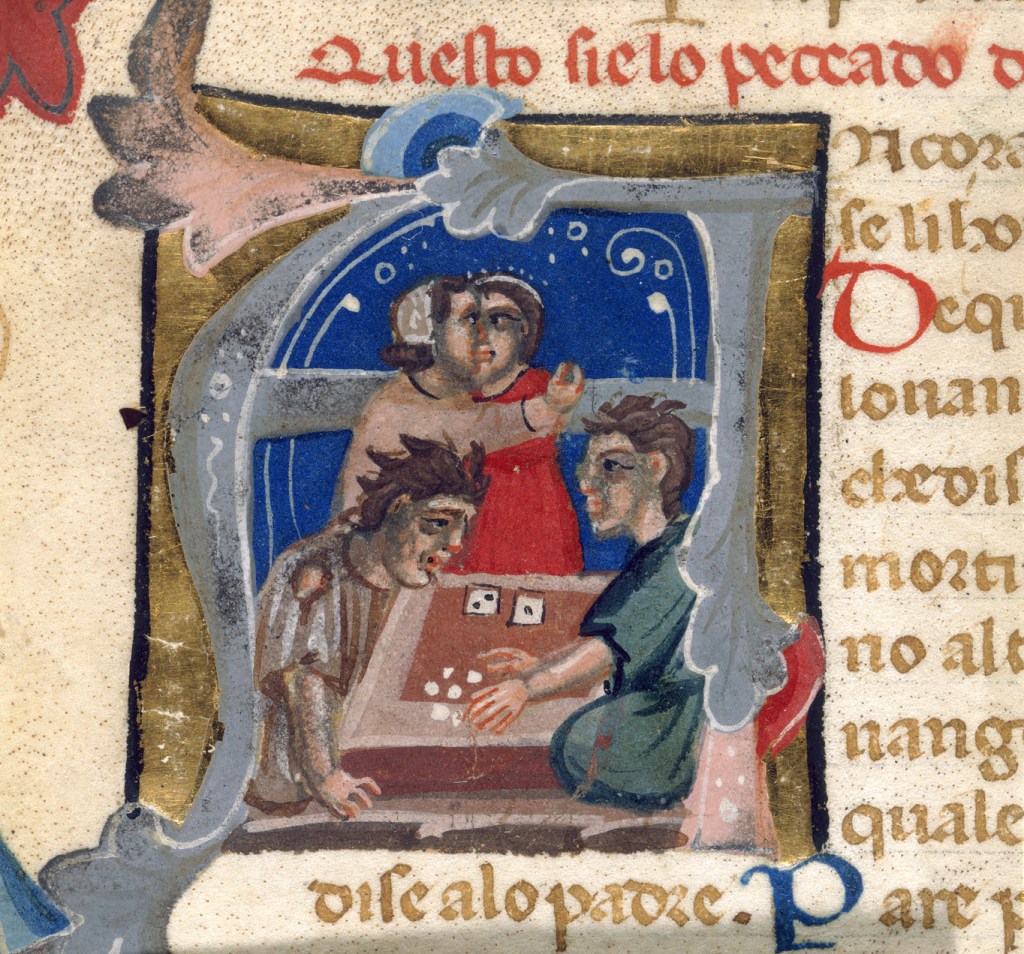
Crediti immagine: Miniatura di giocatori di dadi, XIV secolo, dal Libro de Multi Belli Miraculi. https://imagesonline.bl.uk/asset/4820/
English:
Over the centuries, languages descending from Latin have crossed the Italian and then European borders where they originated, reaching distant continents and growing in the number of speakers. But this is not the fortune of the Neo-Latin languages we are talking about here: we are talking about the fortūna with a long u, the one that when browsing through Latin dictionaries in high school showed a cascade of meanings depending on how, where and by whom it was written. In Latin, in fact, fortuna indicated luck, fate, chance: neither good nor bad, neutral and blind. Over time, however, Latin has dissolved into dozens of languages and each has declined the term and its meaning in a different way. Italian has kept the word practically unchanged, but only in form: luck is positive and opposed to misfortune.
Instead, we use the word sorte (Latin sors, sortis) to indicate the randomness of destiny. But from this same Latin root we have the Spanish suerte and the Portuguese sorte which instead have a positive meaning, exactly like the passage from Latin to Italian of fortuna. How is the concept of chance or destiny expressed in the Iberian peninsula? Well, the Spanish borrow the Arabic az-zahr (“the dice”) for the word azar (just think of the game of chance which shares the same etymology). The Portuguese do not miss the opportunity to distinguish themselves from their cumbersome neighbors and use the same word but to indicate bad luck, jinx, in short when things continue to go badly for us and we ask our friend’s grandmother to check if we have the evil eye. The French instead take up the idea of the dice to indicate fate with “chance”, derived from the Latin cadentia which indicated the fall of the dice. Last, but not least, is Romanian: a Romance language exiled among the Slavic populations who by necessity have undergone its linguistic influence.
Although there is the word soarta (clearly of Latin origin sors, sortis), the more common term in use is noroc. From a language that borrowed from the Slavs “da” to say “yes”, it is not surprising that it decided to entrust its fate to them: noroc derives from the Church Slavonic naroku (literally “on time”), a verdict or judgment of divine origin. In short, while the Italians rely on Lady Luck, the Spanish, Portuguese and French dedicate themselves to the game of dice and finally the Romanians hope for a sign from the man in the sky with the beard.
Image credits: Dice players, from the Libro de li Multi Belli Miraculi (XIV century), https://imagesonline.bl.uk/asset/4820/
*Alcuni Marginalia, come questo, sono stati scritti da nostri amici, parenti, conoscenti o semplicemente persone che sono capitate qui e hanno deciso di contribuire all’archivio. Se anche tu vuoi partecipare a questo progetto, tutte le informazioni per farlo sono qui.
*Some Marginalia, like this one, were written by our friends, relatives, acquaintances or simply people who happened to be here and decided to contribute to the archive. If you also want to participate in this project, all the information is here.
 marginalia