Italiano:
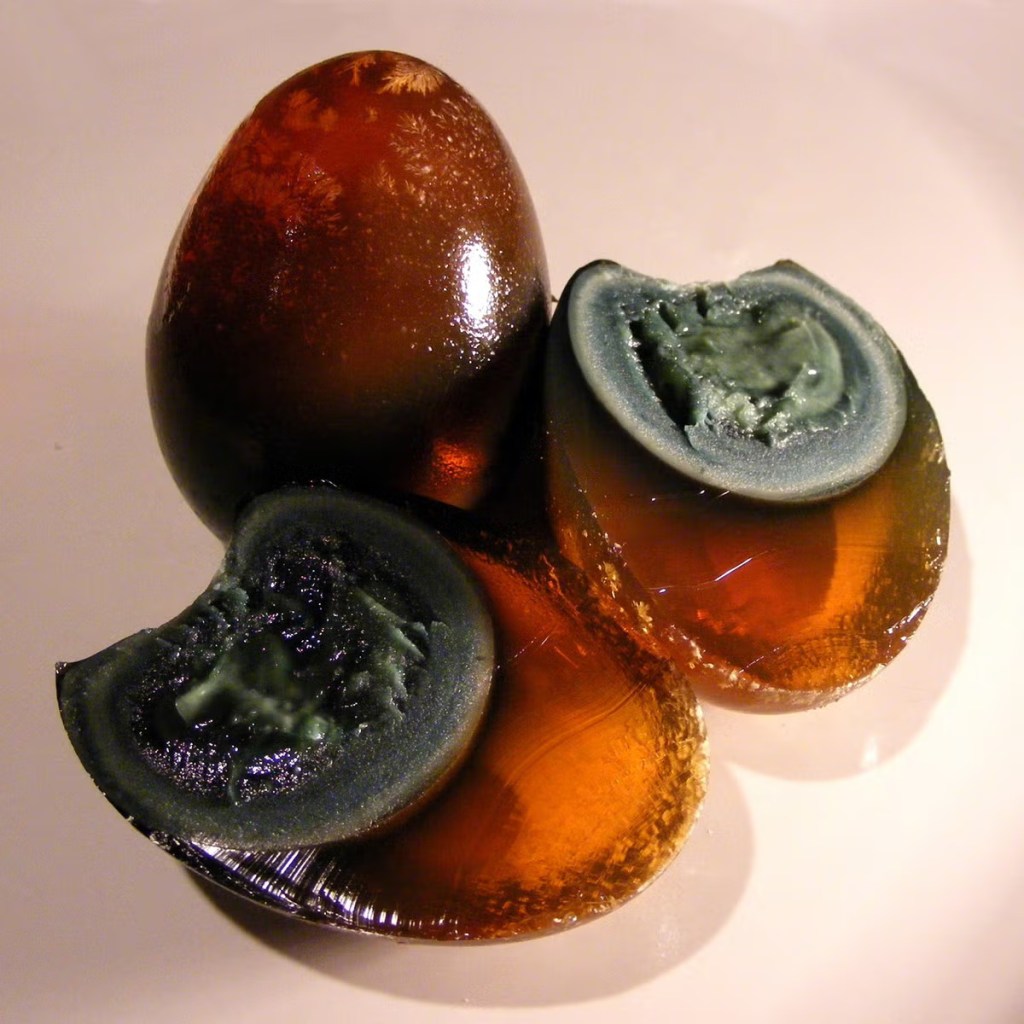
L’uovo centenario è un piatto tradizionale cinese a base di uova (tipicamente di gallina, anatra o quaglia) conservate per settimane o mesi in una soluzione di argilla, cenere, sale e ossido di calcio. Questo fa sì che il tuorlo assuma un colore grigio-nero, mentre l’albume diventa ambrato e semitrasparente.
La prima testimonianza storica delle uova centenarie risale al 1504, quando nella Zhuyu shanfang zabu, miscellanea di testi su vari argomenti di epoca Ming, compaiono le istruzioni per prepararle: “prendi un dou [unità di misura tradizionale cinese, ndr] di cenere di carbone ardente, un litro di calce e fai bollire tutto in una pentola di acqua salata. Poi spalmalo sulle uova e dopo sette giorni il tuorlo e l’albume saranno mescolati”. Le uova rimanevano poi commestibili per diversi mesi.
Nate dall’esigenza di conservare il cibo in un’epoca di frequenti carestie e scarsità di risorse, le uova centenarie vengono oggi servite come antipasto, tendenzialmente da sole, tagliate a spicchi e senza cottura.
Crediti immagine: Getty Images
English:
Century eggs are a traditional Chinese dish made with eggs (typically chicken, duck, or quail) preserved for weeks or months in a solution of clay, ash, salt, and calcium oxide. This causes the yolk to turn gray-black, while the white becomes amber and semi-transparent.
The first historical reference to century eggs dates back to 1504, when the Zhuyu Shanfang Zabu, a collection of texts on various topics from the Ming period, contains instructions for preparing them: “Take one dou [a traditional Chinese unit of measurement] of burning coal ash, one liter of lime, and boil everything in a pot of salted water. Then spread it on the eggs, and after seven days the yolk and white will be mixed.” The eggs then remained edible for several months.
Born from the need to preserve food in an era of frequent famines and scarce resources, century eggs are today served as an appetizer, usually on their own, cut into wedges and uncooked.
Image credits: Getty Images
 marginalia